12.30.2006

FILM - "Children of Men"

From the naturalism of Y tu mamá también to the dark fantasy of Harry Potter and the Prisoner of Azakban, Alfonso Cuarón has always been a vivid director, with shots so tight they hug off the screen and angles so crisp they demand every ounce of tension from a scene. His latest film, Children of Men, is a science-fiction parable for hope and humanity that is no less gritty or visionary as his other work. It is a more deftly executed film than Babel, a more compelling work than the limited Tzameti 13, and every minute is an absolute pleasure to watch, even (or especially) at its most terrifying.

Never mind the social commentary about how a government uses terror as a weapon to police its populace, or the near-future notion of where our nations are heading. Children of Men’s catalyst is a sudden and inexplicable onset of infertility across the globe, but the premise looks more at class disparity and urban terror than at science fiction. (The few nods to the future include holographic advertising on buildings, one-handed integrated computer keyboards, and LED displays in the windshield – all things that exist already.) Our lens for the film is Theo (Clive Owen), a former activist who has been hollowed out just enough by the death of his son to pass the time as a journalist. He’s looking for hope, however, so he’s happy to help his ex (Julianne Moore) secretly transport a miraculously pregnant woman (Claire-Hope Ashitey, as the aptly named Kee) to a group of international scientists known as the Human Project. If only it were that easy: for every good-natured midwife like Miriam (Pam Ferris) there’s an ill-tempered cop like Syd (Peter Mullan) or an ideological radical like Luke (Chiwetel Ejiofor).

Clive Owen is the perfect choice for the role, a leather-skinned man with sunken eyes and a bitter voice. Because much of
Children of Men is shot in action, or suspenseful quiet, Cuarón trusts the nuances of Owen’s craggy face to get across what there isn’t time to say. He also does wonders for the London atmosphere—the film looks much like Danny Boyle’s 28 Days Later—creating a washed-out desolation to every scene. However, whereas Boyle’s film was of an empty London, Cuarón’s shots are crammed with people, and scene after scene is filled with abrupt and gritty violence. In the first scene, Theo buys a cup of coffee and walks outside. He pauses a moment, considering the void in his life, perhaps, and all of a sudden the coffee shop explodes.

In Cuarón’s world, violence cannot be separated from life, and even a moment of messianic calm late in the film holds for just a few minutes before the uncontrollable bullets of man start flying again. A lesser director would overdo the violence, or would lose the message to the thrill-ride moments, but Cuarón makes it all one: the blood isn’t belabored, the politics aren’t precise—everything exists in its own precisely framed moment, and this tragic future rolls on. Somehow, in the midst of this, there are moments of comedy (thanks to the wise casting of Michael Caine as an aged hippy) and the faintest glimmers of hope in childbirth.


From idyllic forest retreats to cavernous art preservation rooms to the uncomfortable grime of an internment camp for refugees, Cuarón has captured the essence of humanity, and has made an effortlessly poignant masterpiece.


First posted at [
Film Monthly]

12.27.2006

MUSIC - One Ring Zero, "Wake Them Up"

One Ring Zero’s latest, Wake Them Up, is a lot like The Arcade Fire’s Funeral, but without all the poetic lyrics: this is a distilled album more interested in experimenting with French-fusion than singing about it. When there are words, they’re half-spoken and half-sung; rarely do they shift out of a one-octave range. The result is a series of fifteen zippy songs, three minutes at most, that range from hopeful instrumental segues (“Happy New Year”) to melancholy string choruses (“Karen”) and experimental sounds, as with the eighteen seconds of vegetative percussion on “Johnny.” Other tracks are playful dirges: a low-fi tuba performance in “Lost,” depressed circus music on “The Sad Carousel.” Some songs are made up of their moods, like the eerie synthesized soundscape of “Robert Hunter’s Monster.” And then some are too good to be mistaken for the happy accident of a jam session: just listen to the melodious, surging pulse of “The Chinese Pavilion” or the haunting lyrics (those “Styrofoam eyes”) of “The Queen of Displays.”

Read on at [Silent Uproar]

12.22.2006

THEATER - "The Coast of Utopia: Shipwreck"

Tom Stoppard’s Voyage was a very heavy play: as the first part of an epic trilogy about Russian intellectuals and their revolutions (The Coast of Utopia), it bore the responsibility for establishing characters like the exuberantly radical Michael Bakunin (Ethan Hawke), the passionate literary critic Vissarion Belinksy (Billy Crudup), and the formidable thinker Alexander Herzen (Brían F. O’Byrne). By contrast, Shipwreck, the second part of the trilogy, is light and often comically witty—it sails on the good humor and fortune amassed by the initial installment and suffers little tragedy (or emotion) until deep in the second act. That’s a little ironic, considering that the first act comprises the French revolution, but the big events always seem to happen from afar (in fact, they’re often staged far in the hollow recesses of the gigantic Vivian Beaumont theater). Stoppard is more interested with the reactions of individual cogs than with the entire mechanism, which explains why the second act of Shipwreck focuses on the fomenting of Herzen’s philosophies on life after the tragic (and offstage) death of his deaf son.

Though Stoppard is technically correct when he claims that each part of The Coast of Utopia stands alone, Shipwreck doesn’t do much by itself: it starts off as a dry exchange of idealisms in Paris and then travels to Nice for a shallow tale of adulterous passion. The former is a shadow of Voyage, the latter is a spectral stab at Chekhov—both seem perfunctory. Herzen simply isn’t as interesting as Bakunin—even when he catches his wife, Natalie (Jennifer Ehle) having an affair with the poet George Herwegh (David Harbour) his stoicism drains the danger from the scene. Such internal mystery is fine for characters who are still on the periphery, like Ivan Turgenev (an excellent Jason Butler Harner) and Nicholas Ogarev (Josh Hamilton), and we don’t have time to delve into the souls of thirty characters, but there ought to be more for the protagonist. Stoppard defines Herzen by history rather than action; consequently, O’Byrne speaks to make the words big instead of allowing the words—those dim, desperately grasped-upon ideas—to make him big. A character defined by words alone is more golem than human.

However, within the context of the entire cycle, Shipwreck is a far more enjoyable evening. It’s not often that we get to see characters grow over several decades or to see talented actors like Richard Easton and Martha Plimpton making the most of small roles. The extra layers from play to play add dimensions to otherwise static scenes, and even at its most boring, director Jack O’Brien has made The Coast of Utopia beautiful to look at. Shipwreck winds up, fittingly, like Herzen: focused more on the technical marvels of O’Brien and company than the emotional range of O’Byrne and company. (Not to diminish the cast in whole: Bianca Amato and Amy Irving, among others, are stunning.)

Because there is less meat to Shipwreck, O’Brien has flavored his theatrical stew with vibrant staging and a transformative set. The deep recesses of the Vivian Beaumont Theater are used in full to play with perspective to show us the Place de la Concorde in Paris being sacked by revolutionaries. Giant chandeliers and oppressive skylights capture the attention and focus the mood better than complex, two-ton sets. Even the simplicity of a watercolor scrim is enough to make us feel at home in Italy. And with just the faintest touch of lighting, O’Brien can plunge us into prison or carry us across the ocean. During segues, characters sing, lending an operatic quality to an already epic cycle. It’s a pity the heart of the play doesn’t match the quality of the staging.

There are, however, high hopes for Salvage. Voyage set up believable characters and breathed the great revolutionary ideas into them. Shipwreck spends its two-and-a-half hours draining these characters of their hot air. Revolution is in the air, and even if it doesn’t reach us in Salvage, we’ll at least have one final opportunity to enjoy O’Brien’s marvelous direction.

12.18.2006

THEATER - "Strings"

Intellectual plays are only as good as they are clever, and although Strings is occasionally very smart, the majority of Carole Buggé’s text goes about reminding us of that fact. (Characters are constantly quoting poetry as if Brit-Lit were the intellectual equivalent of street cred.) The conversations about string theory are fascinating, but not when the actors have to break the fourth wall and use illustrative examples to explain it. That’s like admitting that the parallels between science and society aren’t clear enough. As for the affair at the heart of this play—June cheats on her cosmologist husband, George, with their best friend, Rory (a particle physicist)—it must not be interesting enough, because Buggé adds their scientific idols: there’s a very foppish Isaac Newton (Drew Dix), a dowdy Marie Curie (Andrea Gallo), and a very stolid Max Planck (Kurt Elftmann). Rather than fix the tedium of the train ride or the lulls in the conversation, Buggé uses fantasy to build intimate exposition. As a final element, there’s the raw emotion of June and Rory’s dead son—not just dead, by the way, but 9/11ed. (If playwrights are going to keep using 9/11 as a tragic catchall, then I can verb the tragedy.)

Read on at [New Theater Corps]

12.15.2006

MUSIC - Rory, "We're Up To No Good, We're Up To No Good"

We’re Up To No Good, We’re Up To No Good is a rock-by-numbers release that feels more like an exercise in historical knowledge than a performance worth noting. (It’s also worth noting that their title is an accurate description of their work on this album.) As if going down a checklist, Rory has the shrill punk of My Chemical Romance, the odd techno-paranoia of Radiohead, the myriad rock influences of decades of jamming, and a little bit of dabble here and there. But it never comes together to make an album: it’s the parts alone, not their sum. This actually makes Rory’s release more frustrating than the worthless exhortations of other raging bands. You'll undoubtedly find something you like on this wildly eclectic album, but you'll just as assuredly lose it again in a stream of non sequiturs.

Read on at [Silent Uproar]

12.12.2006

THEATER - "Heresy"

Sabina Berman’s Heresy, playing at the HERE Arts Center, is an attempt both to represent the immigration of colonists to Mexico in the 16th century and the religious persecution of the Jews, even in the New World. The cast’s blunt speechifying makes the result more like a history lesson; the black boxes, hats, and masks left scattered across the empty emphasize this schoolhouse atmosphere. But it’s not a bad play, and as educational theater (based on autobiography), it’s surprisingly solid.

Read on at [New Theater Corps]

12.11.2006

MUSIC - The Scourge of the Sea, "Make Me Armored"

The Scourge of the Sea is either playing against archetype on their new album, Make Me Armored, or exactly to it. Lo-fi alternative meets upbeat folk music, yoked tenuously to cynical love songs. There’s no politics here, just a lovelorn melancholy, but the folk roots (far from Simon & Garfunkel, regardless of the lyrics,( “Goodbye darkness, my old friend”) are what sell this act. Jaded, but not jagged, the album is surprisingly sweet, even though the poetics are often cliché (“your summer eyes were full of grace”), cryptic (“but I tied my love to the paper bag and I tied a jackal to my leg”), saccharine (“my sweet one hurts when she goes down my throat/my sweet one is a thirty-two ounce coke”), or all three at once. But hey, if the songs stay light even when the material gets dark, then so can I.

Read on at [
Silent Uproar]

12.09.2006

THEATER - "The Vertical Hour"

David Hare’s new play The Vertical Hour is too smart. Not that there aren’t stupid lines, but it’s a stuffy production, a lesser version of the straight-laced, upper-crust intellect of recent British imports like The History Boys and The Coast of Utopia. Bill Nighy’s character may be up to task with the dry wits and lively personalities of Simon Russell Beale and Richard Griffiths, and Dan Bittner is surprisingly charming in his role as a melancholy snob, but the show, which attempts to politicize the war in Iraq from the sidelines of a quiet lawn on the Welsh borders and the safety of a Yale University office, falls as flat as Sam Mendes’ monotonous direction. (He’s not the only one sleepwalking through this show: bring a pillow.)

If you’re paying attention, the show is impossible to like: Hare would have us cease our sideline percolations and get involved, but the only thing he does here is to use leftovers from Stuff Happens mixed with some half-drawn Relationships in Turmoil, in this case between a father and son (Nighy and Bittner) and a girl (Julianne Moore). Words are exchanged easily enough between Moore and her cohorts, but that’s only because Moore doesn’t seem to be taking them in: like a rag doll waiting to be posed, she brings a lifeless resignation to a character who talks constantly about the need to be up in arms.

The show’s also desperately in need of cuts: the bookending scenes add little to the plot and only slightly more to Moore’s character, and the scene-changing monologues serve only to blandly foreshadow a show that doesn’t have any suspense. It’s also worth considering that nothing cracks on the exterior (or even happens) until the end of the first act. Yes, it’s a character piece and yes, it’s setting things up—but that excuse is only valid if the characters are interesting, and if the story goes to another level later. There are two relationships that die in this play, and neither one of them happens onstage.

We have too little time in our real lives to waste it listening to people talking about their fake ones: give me something that I can take away from a performance… at least entertain me. This play, almost as static and sedentary as the large scene-stealing tree, doesn’t even do that.

12.08.2006

THEATER - "Love: A Tragic Etude"

Love was a battlefield long before they sung it that way. Love: A Tragic Etude is expressionist theater that merges the violence of Sarah Kane with the dystopian tragedy of Brecht. The individual pieces don’t always make sense, but they’re viscerally resonant and poetically raw. Taken together, the effect is an overwhelming study (set to live piano accompaniment, for those who don’t know what an etude is) in dismantling our values, punishing our heroes, and torturing our innocence. Love is not just blind—she is unflinching, too.

Written and directed by Juan Souki without a moment of respite or pity for the audience, love is dismantled at every turn. Even the gentle caresses of our two lovers, Fernando (Gil Bar-Sela) and Arena (Melinda Helfrich), are false: Fernando has already left the fictitious Red City for military service and Arena is reading his letter. Their unity is a mirage of Souki’s magnificent staging; a side effect of the short silent film we see that cites their celebration “five years of union.” Over the next ninety minutes, Souki carves time and space, using jagged physical techniques and delicately synchronized movement to make a brutally beautiful play.

Read on at [New Theater Corps]

12.07.2006

THEATER - "High Fidelity"

High Fidelity is an adaptation of a movie’s rendition of a popular book, which sounds like a mess. But although the theatrical production is all over the place, eschewing the top five gimmicks and minimizing the ex-girlfriends, it manages to emphasizes some of the better portions, such as Rob’s revenge fantasies (“Now that you’ve sucked on my big black glock, how about you suck on my *** ***** ****”). Furthermore, Rob’s two friends, Dick and Barry, play their roles so similarly to their film counterparts that they manage to be cute and campy.

The plot, for those unfamiliar with this name-brand musical, involves Rob’s (Will Chase) attempts to come to terms with his unhappiness, something that’s made worse when his girlfriend of four years, Laura (Jenn Colella) leaves. His two music-geek friends and co-workers, Dick and Barry (Christian Anderson and Jay Klaitz) don’t provide much emotional support, as they’re both pretty stunted in their development (which makes them perfect for comic relief), and his one female friend, Liz (Rachel Stern) sides with Laura after she learns what caused the breakup. Things continue to get worse when his ex shacks up with Ian (Jeb Brown), an interventionist who’s into all things tantric, and hit rock bottom when T.M.P.M.I.T.W. (The Most Pathetic Man In The World) calls Rob a “kindred soul.” Oh, and Rob’s also haunted by his imagination, a powerful force that conjures up nightmares of Laura, Ian, and all of his former girlfriends getting it on.

There’s no shortage of things happening: Walter Bobbie’s direction keeps things moving forward, though the real trick is Anna Louizos’s set design, a shuffling series of backdrops that operate almost like a pop-up book and which, at one point, show the parallels between Rob and Laura, post-breakup. There’s no shortage of cleverness either, although this slickness tends to illustrate the shallowness of Tom Kitt’s music. Despite all the 80s influences, it’s not exactly catchy or repeatable stuff, and Amanda Green’s lyrics make even good songs seem generic (“As sure as the baby cries and the river flows/she goes”). Doesn’t change the fact that the show’s still fun to watch, and if the music misses a beat here and there, Christopher Gattelli’s choreography doesn’t (his work on Altar Boyz helps, High Fidelity is mostly 80s pop).

High Fidelity is a fun show, but it’s not the feel-good hit of the season – in fact, it’s not much of a feel anything show. So far as emotion goes, Jenn Colella doesn’t seem to have much, and Will Chase plays one side for so long (almost giddily) that his transformation is barely noticeable. The friends, Anderson and Klaitz, steal most of the attention, especially the former, whose Seymour-like graces make him instantly affable. No, High Fidelity is low comedy, and its success depends entirely on whether or not it can find an audience willing to pay for the next-to-best thing for rock musicals.

12.06.2006

THEATER - "Never Missed a Day"

I’d like to say that WorkShop Theater Company’s new show Never Missed a Day never misses a beat, because underneath the awkward pauses and “monolongs” (monologues that go on and on), Ken Jaworowski has written a decent show. And underneath their tics and too-rapt glares (where an actor tries too hard to let the audience know he’s listening), the actors have made a believable connection to their pathetic, self-deceiving office drones. It’s a testament to the truth of the material that even when the pace is so slow you can see a trail of slime, you’re still empathizing (even as your eyelids droop).
Read on at [New Theater Corps]

12.05.2006

FEATURE - "DirectorFest 2006"

Everybody remembers the actors, and if they don’t fall asleep, they’re aware of the playwright’s words, too. But outside of awards shows, how many people ever give credit to the directors? How many people recognize all the hard work that goes into pulling the disparate parts together, from scene work to scenery? Not enough, but perhaps more should: and if you’re looking for upcoming directorial talent, there’s no better place to turn than The Drama League’s DirectorFest 2006, its twenty-third festival of one-acts directed by members of The Drama League Directors Project.

Culled from a crop of young applicants, the fellows have an opportunity to network and learn from industrial professionals and get hands-on experience with NYC and regional assistant directing assignments. This year’s directors are Meredith McDonough, Alex Torra, and Jaime Castañeda, and below you can read how they view the industry, the process, and the importance of theater. Selected portions of their interview follows, but you can see the culmination of their vision Thursday, December 7 through Sunday, December 10 at the Abington Theater Center’s June Havoc Theater (312 West 36th St.), an evening (or afternoon) of new one-acts like Itamar Moses’ Authorial Intent or Jonathan Ceniceroz’s The Blessing of the Animal, as well as an old Harold Pinter play, One for the Road.

Read on at [New Theater Corps]

12.01.2006

ARCHIVE

Essay
On Writing I: The Modern Writer's Workshop

Theater

Acts of Mercy
A Jew Grows in Brooklyn
Altar Boyz
The Amulet
Anais Nin: One of Her Lives
An Oak Tree
Anton
Arabian Night
Awake and Sing!
Baby Girl
Beckett Below
Bone Portraits
Buried Child
The Busy World Is Hushed
The Cataract
The Caine Mutiny Court-Martial
Clean
cloud: burst
The Coast of Utopia: Voyage + Shipwreck
Company
Crazy for the Dog
Dark Yellow
Dead City
Defiance
Devil Land
DirectorFest 2006: Feature
Everythings Turning Into Beautiful
Evil Dead/The Internationalist
Faith Healer
The Field
Food for Fish
The Fortune Teller
Freak Winds
The Gold Standard
The Great Conjurer
Hard Right
Heresy
The History Boys
High Fidelity
Home Front
How to Save the World and Find True Love in 90 Minutes
I Love You Because
The Imaginary Invalid
In Delerium
Intellectuals
In the Continuum
Iphigenia Crash Land Falls on the Neon Shell That Was Once Her Heart (A Rave Fable)
Iron Curtain
Lemkin's House
Levittown
The Lieutenant of Inishmore
Little Willy
Love, a Tragic Etude
Love Is in the Air
Macbeth (@ Public Theater)
The Mail Order Bride
The Man Himself
Marco Million$ (based on lies)
Marisol
The Maternal Instinct
Mercy on the Doorstep
Modern Living
'nami
Neglect
Nerve
Never Missed a Day
Nora
Not Clown
Paradise Lost
Phenomenon
Pig Farm
RFK
Safety
Savages
screwmachine/eyecandy
The Sneeze
Songs of the Dragons Flying to Heaven
Stadttheater (The Woman Before and Slipped Disc)
Stanley (2006)
Strings
Sucker Fish Messiah
The Thugs
Tommy Tiernan: Loose
Truce on Uranus
True West
The Vertical Hour
Walk the Mountain
Well

What Women Talk About
Worth
Zarathustra Said Some Things, No?

Fringe Festival 2006
Absolute Flight
Americana Absurdum
Billy the Mime
Broken Hands
The Burning Cities Project
The Deepest Play Ever: The Catharsis of Pathos
Diving Normal
Garbage Boy
The Infliction of Cruelty
I Was Tom Cruise
Letter Purloined
Minimum Wage: Code Blue Ringo
Never Swim Alone
The October Sapphire

Only a Lad
Open House
Perfect Harmony


Performance (Other)
Muse: Hammerstein Ballroom, 8/03

Books

Black Swan Green
Blind Willow, Sleeping Woman
The Brief and Frightening Reign of Phil and The Sea
The Brooklyn Follies
Case Histories
Everyman
The Fourth Bear
Gilead and No Country For Old Men
The Good Life
In Persuasion Nation
Liquidation
Martin Dressler
Notable American Women
The Omnivore's Dilemma
Special Topics in Calamity Physics
Talk Talk
The Wisdom of Crowds and The Acme Novelty Library
Uncentering the Universe: Copernicus and The Revolutions of the Heavenly Spheres

Film
12 and Holding
13 Tzameti
American Gun
Babel
Cache
Children of Men
Cowboy Del Amor
Go For Zucker!
I Am a Sex Addict
Land of Plenty
London
Lonesome Jim
The Fountain
Funny Money
Kill the Poor
Mission Impossible 3
Perfume
Pirates of the Carribean: Dead Man's Chest
The Prestige
Saw III
School for Scoundrels
Shadowboxer
Superman Returns
Talladega Nights: The Ballad of Ricky Bobby
V For Vendetta
Wordplay
X-Men: The Last Stand

Tribeca Film Festival 2006
- See "Previous Posts" sidebar for more coverage

Music
The Ark - State of the Ark
Boom Boom Satellites - Full of Elevating Pleasures
Carey Ott - Lucid Dream
Carina Round - Slow Motion Addict
The Crimea - Tragedy Rocks
Devics - Push the Heart
Fivespeed - Morning Over Midnight
The Forecast - Late Night Conversations
The Fully Down - Don't Get Lost in a Movement
Guster - Ganging Up On the Sun
The Lovely Feathers - Hind Hind Legs
Lying in States - Wildfire on the Lake
Magnet - The Tourniquet
Margot and the Nuclear So and Sos - The Dust of Retreat
The Mars Volta - Scab Dates
One Ring Zero - Wake Them Up
Paul Duncan - Be Careful What You Call Home
Persephone's Bees - Notes from the Underworld
Pony Up, Make Love to the Judges With Your Eyes
Portugal, The Man - Waiter: You Vultures
Push to Talk - Push to Talk
Richard Cheese - Sunny Side of the Moon
Roman Candle - The Wee Hours Revue
Rory - We're Up To No Good, We're Up To No Good
Rusty Anderson - Undressing Underwater
The Scourge of the Seas - Make Me Armored
Smoking Popes - At Metro
Sonya Kitchell - Words Came Back to Me
The Subways - Young for Eternity
The Weepies - Say I Am You

TV
SciFi Channel: Summer '06

11.29.2006

THEATER - "Company"

In spite of director John Doyle (and thanks to Raúl Esparza), Stephen Sondheim’s musical of vignettes, Company, has made a triumphant return to Broadway. From the set to the lighting, the show has everything going for it except Doyle's gimmick of doubling actors as musicians. Whereas Sweeny Todd forced Doyle to come up with creative combinations of character and instrument, Company rarely uses its entire cast at once, which renders the effect more an economic sidebar than a relevant or fresh medley... But beyond that first step--and it may be a doozy--Company is a triumph and Esparza is due a Tony for his commanding work as Robert, top dog of the glowing thirteen person ensemble one moment, depressed romantic the next.
Read on at [New Theater Corps]

11.28.2006

BRIEF: "Evil Dead" and "The Internationalist"

Evil Dead: The Musical is all the proof you'll ever need that I don't hate campy musicals. I just hate poorly done campy musicals (as with How I Found True Love and Saved the World...). Granted, I'm a fan of the franchise, but even without that, there's something unabashedly fun about getting covered in gore at a late-night performance that both mocks and embraces the Rocky Horror spirit. Dancing, raping trees, dinky footbridge sight-gags, and an ensemble cast that can sing well even after being dismembered--it's fantastic, and, believe it or not, is a heck of a lot funnier (though perhaps not bloodier) than last year's so-called farce The Lieutenant of Inishmore. The cabin's creepy set design and animatronics also garner some points for the production, as do the quick makeup changes and goofy ballads; this is a show worth sawing your own arm off for.

The Internationalist is closed now, again, and with it goes another opportunity to see a talented ensemble cast outperforming the flaws of its script. We aren't supposed to understand what the characters in this ficticious foreign country are saying, but the inability to comprehend our visiting American protagonist's Lost in Translation plot makes Anne Washburn's script like a thin and gauzy dance of the seven veils: both translucent and opaque, both seductive and frustrating, it's hard to pass judgement on. I will say that the set design--a Morrocan stucco of sorts, recessed far enough back in the stage that a portable office can sit in the center--did not sit well with me, reducing the show more to an art piece than a comedy. The lighting managed to balance some of the notes and tones lost in the rest of the production, as did the superb and crisp acting of the cast, but the conclusion left me both in search of the punchline and the punch.

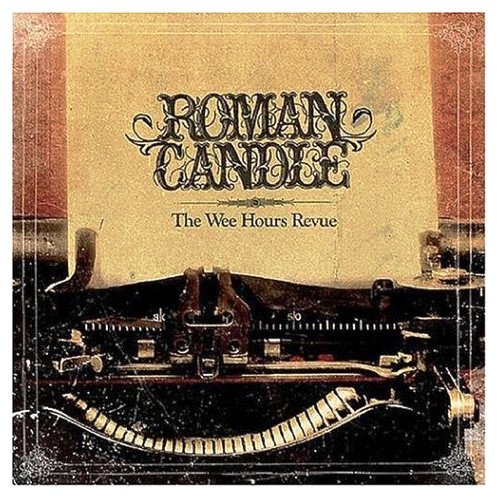
MUSIC - Roman Candle, "The Wee Hours Review"

Too brash for country, too acoustic for rock, and too poetic for pop, Roman Candle is a perfect fit for the firework it is named for. There's a mellow outer shell, occasionally amplified by synthesizers (but never lost in them) but Skip Matheny's crooning is just casing for the subtle mechanics underneath. Words that slide within one another like gloves, twang-heavy chords that shuffle off the drum beats, and a powerful storytelling rhythm that should propel this vibrant musical explosion to the top of the charts.

Read on at [
Silent Uproar]

11.22.2006

FILM - "Perfume"

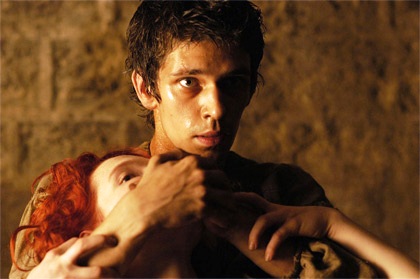
How did a 1985 German gothic horror novel gain attention enough to warrant a film? That story, one which would reveal how German auteur Tom Twyker (of Run Lola Run) got involved, would be more interesting than the overly stylized urban fantasy that is Perfume: The Story of a Murderer. Strictly as a period piece, Twyker gets some great shots of the good, bad, and ugly Renaissance France, but it is plagued by an inability to make us relate to anyone in the film, be it the vengeful father Richis (Alan Rickman), the doltish perfumer Baldini (Dustin Hoffman), or even our misunderstood serial killer, Jean-Baptiste Grenouille (Ben Whishaw). (Then again, it’s hard to say “misunderstood”—he kills at least thirteen women in an effort to create a god-like perfume.)

Read on at [Film Monthly]

FILM - "The Fountain"

You should know that I really wanted The Fountain to be good. Aronofsky’s previous two films, Pi and Requiem for a Dream, were what got me interested in cinema in the first place. And while Aronofsky still knows how to handle the camera, it seems like he’s lost control of what to actually film. His “epic” is a triptych spanning the lives of two lovers in the years 1500, 2000, and 2500. The jungle adventures of a Spanish conquistador looking for the Tree of Life atop an ancient Mayan temple could well have been directed by a lesser-budgeted Peter Jackson (lush, but without scope). The modern sequences of a doctor trying to find a cure for his wife’s brain tumor—it might as well be Sam Mendes filming, with his simple observations of life, love, and loss. And as for the future scenario, Kubrick is written all over it, from the silent and meditative sequences, to its ambiguous (though not as prolonged) visual landscaping. The only thing that’s pure Aronofsky is the beautiful editing, the bleeding of one time to another, and that’s just eye candy to distract from the all-too-confusing plot.

Read on at [Film Monthly]

11.20.2006

THEATER - "Home Front"

Yes, Home Front is a play about post-traumatic stress syndrome, and yes, it is a partially modernized version of Euripides's’ classic Greek drama, Herakles. But Daniel Algie's choice to set the show in 1972 makes the work both dated and formulaic, as out-of-touch with today as Herakles itself. Why set up one parallel to make another parallel? It seems that Algie just likes the road most traveled: his tragedy is tame and predictable, and his characters are the same.

Meg has spent the last seven years in and out of an insane asylum, too busy grieving for her MIA husband to care for her children. Fact. Her lonely father-in-law, Arthur, resents her for it, though he loves caring for his grandkids. Fact. (But we'll have to take the script's word for it -- Joseph Jamrog is so dispassionate as Arthur that he appears to be sleepwalking.) These two elements of the play are completely ignored in the second act. Fact. Heck, the only consistent thing is the scattered exposition, and while at least Fletcher McTaggert's delivery as the ex-MIA husband isn't bad, he's still delivering unflinchingly dull confessions. With such weak characters, there's no way to avoid listening to the dishpan dialogue: "This too shall pass. You're a tough old bird." I don't know if people once spoke like this, but doesn't the playwright have a license--no, a duty--to make it sound better?

As for E. Randahl Hoey's direction, save for an invigorating dream sequence early on in the first act that shows the promise of a more metaphorical play, the action is thick as cement, and about as exciting. There'’s so little happening that after chomping at the bit for two hours, the actors go overboard when the big moment hits, only to find that the play keeps going for another fifteen aimless minutes, just one more disconnected scene.

Home Front doesn'’t bring up any big questions; that's good, it doesn't seem capable of answering any. Instead, the play is a confessional: each character gets a lengthy monologue to encompass their sins. Arthur reveals that he's not actually Harrison's father. Meg reveals that she's not a good mother. And Harrison reveals that while being tortured for seven years, he had to do some things he'’s not very proud of. (Big shockers all, I know.) It seems to me that as long as Algie'’s written a play this long and overbearing, he might as well write himself in for the finale so that he too can confess or at least apologize for writing this play.

11.19.2006

THEATER - "An Oak Tree"

An Oak Tree is Gimmick Theater at it's not-so-finest. However, it's bankable cast makes it viable: every night, a new actor who has never read the script or seen the show will join Tim Crouch (who plays a hypnotist) for this two-hander. The play, written by Crouch, is an interesting short story that uses the metaphor and the mechanics of hypnotism to deal with the grief of memory. The actor plays the father of a little girl that Crouch's hypnotist has killed, a man so distraught by the accident that he's convinced he's turned his daughter into an oak tree. The delusion is well served by the poetic lines, but delivered cold by an actor who is coming to terms with the role piecemeal, it's more controlled and uneven than gripping. Maja Wampusyc, the actor for the 11/18 performance, may have been hypnotized: I, however, was not.

Read on at [New Theater Corps]